
Egg Donation in Ukraine A Thoughtful Path to Parenthood
Choosing egg donation is rarely a first step. Most intended parents arrive here after years of consultations, testing, and deeply personal decisions about how to move forward. This page is designed to give you clear, medically grounded information without pressure so you can understand whether donor egg IVF in Ukraine is the right path for you.
Embryon Orchid™ Egg Donor Profile Database
Top 5% of Carefully Selected Ukrainian Donors. Search our database of prequalified egg donors to grow your family.

Who Egg Donation Is Right For
Egg donation is a medically established pathway for women and couples who are unable to
conceive using their own eggs. It is commonly recommended for women with diminished
ovarian reserve, low AMH, premature ovarian insufficiency, repeated IVF failure, genetic
considerations, or age-related fertility decline. Egg donation is also an appropriate option for
single women and couples who wish to maximize their chances of achieving a healthy
pregnancy.
For many intended parents, choosing donor eggs is not an impulsive decision. It is a considered
step taken after experience, reflection, and professional guidance. Egg donation shifts the focus
away from ovarian response and toward embryo quality and uterine readiness — two factors
that play a decisive role in implantation and live birth outcomes.
Egg Donation in Ukraine: How the Process Works
Egg donation in Ukraine follows a structured and medically coordinated pathway designed to
prioritize embryo quality, endometrial preparation, and precise timing. Fertilization and embryo
development take place in Kyiv, while most recipients complete testing, hormonal preparation,
and monitoring in their home country.
The process includes donor coordination, fertilization of donor eggs, embryo culture to the five-
day blastocyst stage, and a carefully timed embryo transfer. Each stage is coordinated by a
dedicated fertility consultant to ensure clarity, continuity, and support throughout the journey.
Timeline & Travel Planning
Most recipients complete baseline testing, hormonal preparation, and ultrasound monitoring in
their home country. Travel to Kyiv is typically required only for the embryo transfer, once the
endometrium has reached optimal thickness — generally between 7 and 11 mm.
From preparation to embryo transfer, the process usually takes one to two months, depending
on individual readiness, test availability, and coordination timelines. This structure allows
intended parents to plan travel efficiently while minimizing unnecessary time away from home.
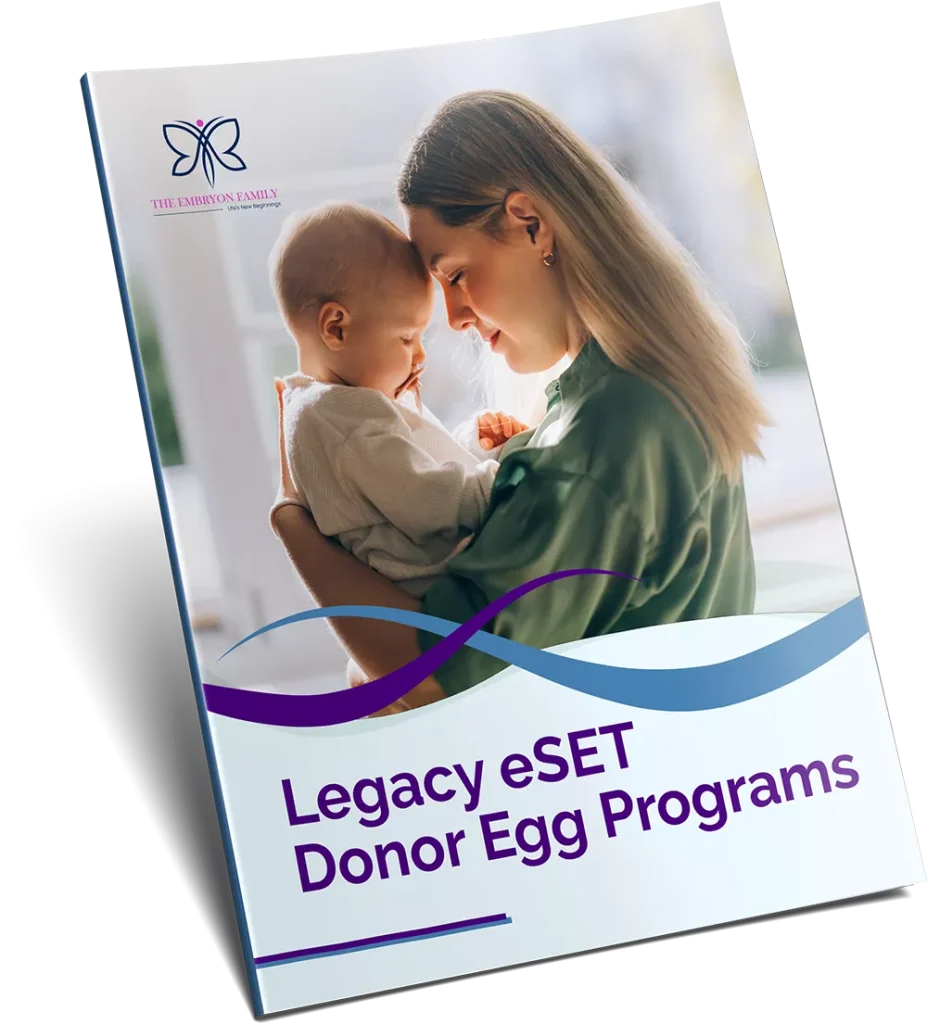
Download the Legacy eSET Donor Egg Program E-Guide
Discover comprehensive information about our Legacy eSET Donor Egg Programs — including available options, detailed insights, and guidance on your next steps.
Preparing for Embryo Transfer
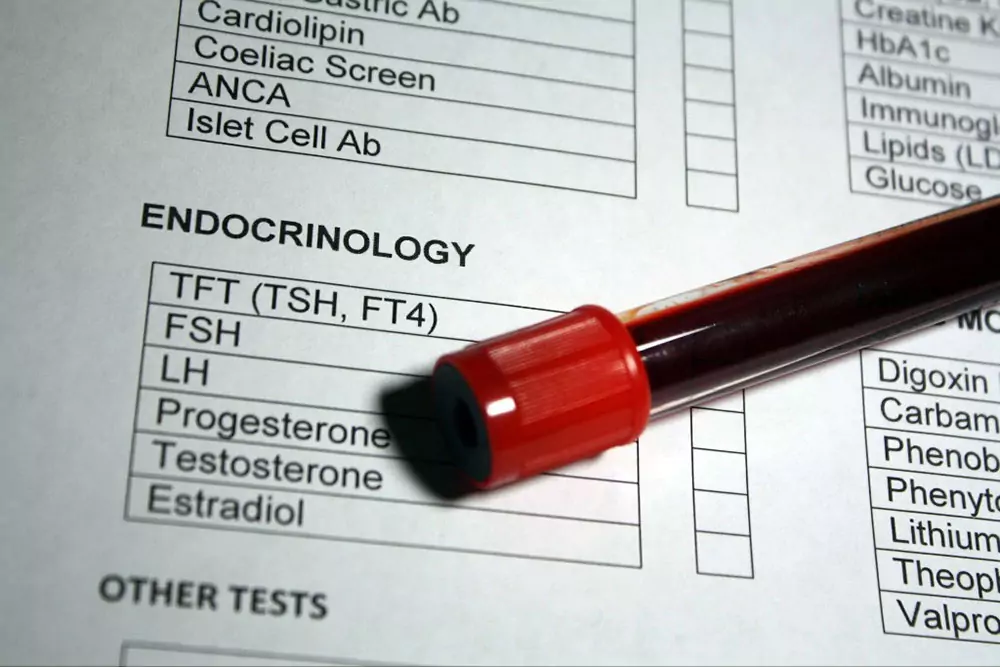
Endometrial preparation for donor egg embryo transfer is less demanding than ovarian
stimulation used in IVF with one’s own eggs. Estrogen and progesterone are used to support
the uterine lining, with monitoring performed locally whenever possible.
Proper preparation, hormonal balance, and precise timing are essential contributors to
successful implantation. Your fertility consultant coordinates communication between your local
physician and the embryology team to ensure alignment at every stage.
Orchid Journey Management System
The Orchid Journey Management System (JMS) is Embryon’s secure coordination platform for
egg donation and surrogacy cases. It is designed specifically for third-party reproductive care and
supports structured case management, medical coordination, and clear communication
throughout the treatment process.
Unlike generic CRM or patient portals, Orchid is purpose-built for fertility journeys that involve
multiple stakeholders, locations, and regulatory requirements. It allows Embryon’s medical,
coordination, and administrative teams to manage each case as a single, continuous process
rather than a collection of disconnected steps.
Through Orchid, intended parents and the Embryon care team work within one protected digital
environment that supports:
Centralized document management
Secure upload, review, and archiving of medical records, consent forms, test results, and legal documentation.
Confidential communication
Encrypted messaging between intended parents, fertility consultants, coordinators, and clinical staff, with clear records and continuity.
Structured task coordination
Automated reminders and status tracking for testing, preparation milestones, appointments, and required actions.
Process visibility
Clear overview of current cycle stage, upcoming steps, and responsibilities, reducing uncertainty and unnecessary follow-up.

By consolidating communication and administration into a single system, Orchid reduces
logistical friction, minimizes the risk of missed requirements, and supports a transparent, well-
coordinated experience from consultation through embryo transfer.
Embryon Family Fertility Center is the first clinic in Ukraine to integrate Orchid into routine egg
donation and surrogacy care, reflecting a commitment to structure, traceability, and clarity at
every stage of treatment.

Orchid Egg Donor Profile Repository & Advanced Search
Orchid also serves as Embryon’s structured egg donor profile repository, designed to support
informed, medically guided donor selection.
Rather than static lists or unstructured catalogs, donor profiles within Orchid are presented in a
standardized, data-driven format. Each profile contains medically verified and clinically relevant
information, allowing intended parents to review options clearly and consistently.
Donor profiles include, where applicable:
- Phenotype characteristics
- Medical and reproductive history
- Genetic and infectious disease screening results
- Educational and lifestyle information
- Availability for fresh or frozen cycles
Advanced search and filtering tools allow fertility consultants and recipient families to compare
multiple criteria simultaneously, supporting efficient matching without compromising clinical
oversight.
This structured approach improves transparency, reduces ambiguity during donor selection, and
allows Embryon’s care team to align donor availability, medical readiness, and recipient
preparation with precision.
Fresh vs. Frozen Donor Eggs: What You Need to Know
At Embryon, we offer both fresh and frozen donor egg options, and choosing between them often comes down to practical considerations like medical readiness, treatment timing, and logistics—rather than any notion that one is better than the other.
When it comes to fresh donor eggs, the process requires syncing the cycles of both the donor and the recipient. This means that once the eggs are retrieved, they can be used right away to create embryos. On the flip side, frozen donor eggs are mature Metaphase II (MII) oocytes that have been carefully vitrified and stored in a cryobank. This allows for greater flexibility since you don’t have to worry about cycle synchronization. It’s especially convenient for intended parents who might be preparing from abroad.
Thanks to significant advancements in vitrification and lab techniques over the past decade, frozen donor eggs are now viewed quite differently in the world of reproductive medicine. Leading organizations like the ASRM and various European reproductive medicine societies have found that, when proper lab standards are upheld, the success rates for fertilization, embryo quality, implantation, clinical pregnancies, and live births using vitrified donor eggs are generally comparable to those achieved with fresh donor eggs.
As a result, many modern fertility practices see both fresh and frozen donor eggs as equally viable options. The decision often hinges on specific medical circumstances, donor availability, timing, and individual treatment plans, rather than any assumption that one method is superior.
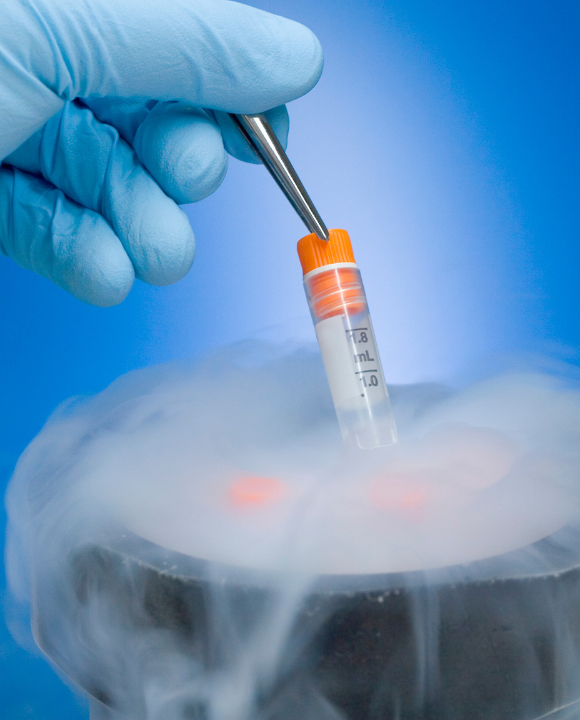
Ultimately, like all IVF procedures, the success of your journey will depend on a mix of biological and clinical factors, including embryo development, lab standards, uterine receptivity, and personalized medical care.
ASRM Findings on Oocyte Cryopreservation
ASRM Recommendations / Key Points
- It is recommended to tell recipients that previously cryopreserved donor oocytes are a reasonable option compared with fresh donor oocytes, given that there is good evidence that there are no significant differences in per transfer pregnancy rates compared with those with fresh donor oocytes.
- Recipients can be counseled that as the number of donor oocytes warmed increases, there is an associated increase in cumulative live birth rate.
- Recipients can be counseled that live birth rates may be greater from vitrified oocytes that derive from donors who had prior successful outcome after a fresh cycle of oocyte donation.
- Recipients can be counseled that the length of time that oocytes have been stored is not associated with differences in oocyte survival or pregnancy rates.
- There is insufficient evidence to recommend a particular stimulation protocol for oocyte donors or certain donor characteristics in terms of embryo quality or success rates.
- Recipients can be counseled that, based on limited evidence, neonatal outcomes appear similar between vitrified and fresh donor oocytes.
11 Reasons Embryon Family Fertility Center Is a Trusted Source for Egg Donation in Ukraine
When considering egg donation, intended parents are not simply choosing a clinic or a country — they are choosing a process, a team, and a philosophy. At Embryon Family Fertility Center, egg donation is approached with medical precision, human sensitivity, and a belief that Everything Matters™ — from donor screening and embryo development to communication, timing, and emotional support.
Compassionate Care and Committed Support, Every Step of Your Journey
Egg donation is a journey, not a single medical event. Embryon provides continuous guidance through a dedicated fertility consultant who coordinates each stage of the process from preparation through early pregnancy.
Everything Matters™ — A Working Philosophy
Small details in fertility care often have large consequences. Timing, hormone balance, laboratory handling, communication clarity, and emotional readiness are treated with equal importance.
Proven Ability to Manage Complex and Unexpected Situations
Fertility journeys do not always follow a predictable script. Medical, logistical, or legal variables
can arise unexpectedly, and not all agencies or clinics are equipped to respond effectively when
they do. Embryon’s strength lies in its ability to manage complex and unforeseen situations with
experience, structure, and clinical oversight.
As a fertility center — not a brokerage model — Embryon has the medical expertise, decision-
making authority, and operational depth to adapt quickly when circumstances change. This
capability provides intended parents with reassurance that their journey is supported not only
when things go as planned, but also when they do not.
Advanced Donor Matching Through Orchid Journey Management System
Donor selection is medically guided and professionally managed. Orchid ensures discretion, structure, and continuity without turning donor matching into a transactional experience.
Carefully Screened Egg Donors Top 5%
All donors undergo comprehensive medical, genetic, and psychological screening before acceptance into the program.
A Medically Focused, Not Commercial, Approach
Embryon’s egg donation programs are designed around medical outcomes rather than volume or speed, ensuring quality is never compromised for convenience.
Experience With International Intended Parents
Decades of experience working with patients preparing abroad allow seamless coordination with local physicians and reduced logistical stress.
Embryology Excellence
Embryon’s embryology laboratory combines experienced embryologists, tightly controlled
laboratory conditions, and advanced technology to support optimal embryo development.
Strict regulation of air quality, temperature, and handling protocols minimizes environmental
stress on embryos, while modern incubators and carefully selected culture systems allow for
precise monitoring through the blastocyst stage.
This level of control, consistency, and technical discipline is essential for donor egg IVF and
elective single embryo transfer, particularly in complex or high-expectation cases.
Individualized Care Pathways
No two fertility journeys are identical. Treatment strategies are tailored based on medical history, sperm quality, endometrial readiness and receptivity.
Transparent Communication & Education
Intended parents receive clear explanations, realistic expectations, and timely updates
throughout the process. Embryon’s approach to education is informed by decades of experience
working closely with intended parents and observing real-world factors that influence outcomes.
When appropriate, guidance may also extend beyond the clinic itself — including evidence-
based lifestyle and nutritional recommendations aimed at supporting sperm health prior to
fertilization. This proactive, educational approach reflects Embryon’s commitment to continuous
learning and optimization, ensuring that decisions are informed, personalized, and aligned with
each couple’s unique clinical context.
Commitment to the Journey
While outcomes matter, Embryon also recognizes that the fertility journey itself leaves a lasting
impact. Many members of the Embryon team bring not only professional expertise, but personal
understanding — including individuals who have been egg donors, surrogates, or who have
experienced third-party reproduction firsthand.
This lived perspective informs how care is delivered, how decisions are communicated, and
how challenges are navigated. It ensures that support is grounded in empathy, realism, and
respect — not only for the intended outcome, but for the people moving through the process.
When you are ready to explore next steps, our team is here to guide you.
Introducing the Legacy eSET Donor Egg Conception Program
Embryon’s donor egg cycles are centered around the Legacy eSET Donor Egg Conception
Program, which focuses on creating high-quality blastocysts and transferring a single embryo
under optimal conditions.
Legacy eSET reflects decades of experience in assisted conception and emphasizes safety,
precision, and consistency while reducing the risks associated with multiple pregnancies.
Frequently Asked Questions
Who is egg donation recommended for?
Egg donation is recommended for women with low ovarian reserve, repeated IVF failure, genetic concerns, or age-related infertility.
How long does the egg donation process take?
Typically one to two months from preparation to embryo transfer.
Do I need to travel to Ukraine for the entire process?
No. Most preparation is completed in your home country.
What success rates can be expected?
Donor egg IVF significantly improves implantation and live birth rates compared to IVF using one’s own eggs in indicated cases.
What if the first transfer is unsuccessful?
If additional embryos are available, another transfer can be planned. Your fertility consultant will review the cycle with you and discuss individualized next steps.
Will I receive ongoing support?
Yes. A dedicated fertility consultant supports you throughout preparation, transfer, and early pregnancy.

Book Your Appointment Today
“Please be advised that the Embryon Family does not export donor egg cells to other countries; however, we do export embryos. Additionally, it is important to note that single parent surrogacy is not permitted in Ukraine.”