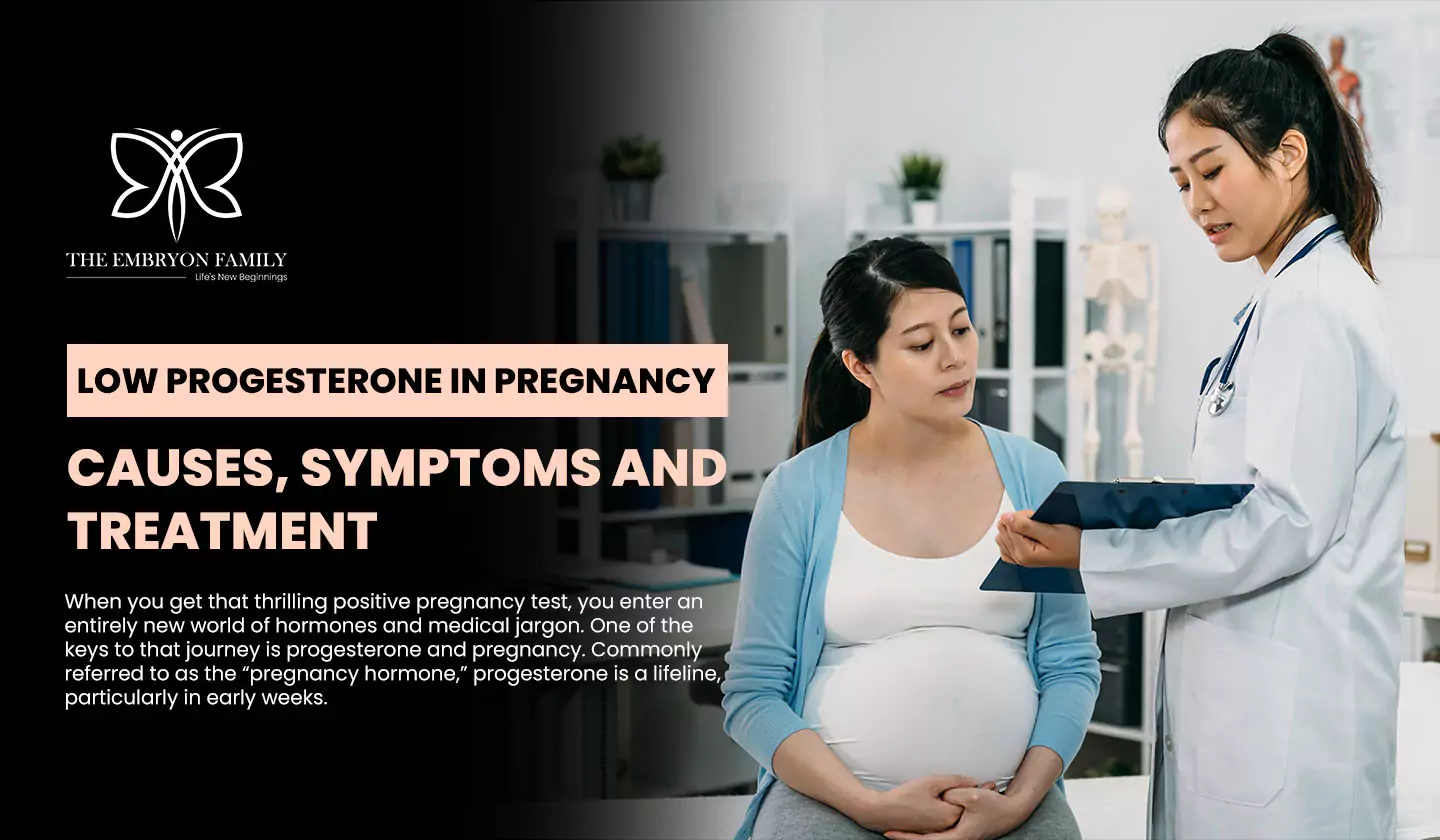
Low Progesterone in Pregnancy: Causes, Symptoms & Treatment

When you get that thrilling positive pregnancy test, you enter an entirely new world of hormones and medical jargon. One of the keys to that journey is progesterone and pregnancy. Commonly referred to as the “pregnancy hormone,” progesterone is a lifeline, particularly in early weeks. However, for some women, a low progesterone in pregnancy diagnosis …

Low Progesterone in Pregnancy

Share

When you get that thrilling positive pregnancy test, you enter an entirely new world of hormones and medical jargon. One of the keys to that journey is progesterone and pregnancy. Commonly referred to as the “pregnancy hormone,” progesterone is a lifeline, particularly in early weeks. However, for some women, a low progesterone in pregnancy diagnosis can cause serious anxiety, commonly associated with loss.

This article goes in depth into why this hormone is so important, what happens when levels are low, and proven medical and natural progesterone treatment for miscarriage & support. We’re also going to take the same conversational, Q&A tone to answer exact questions you could be speaking into your phone at this very moment.

What Is Progesterone And What Does It Do In Pregnancy?

In order to grasp the alarm over low progesterone in pregnancy, you have to understand its fundamental role.

Progesterone is a steroid hormone that develops and maintains an environment in which a pregnancy may occur. This is essential for successful implantation, whether through natural conception, IVF, or using services like embryo donation Ukraine.

The nine essential roles for successful progesterone and pregnancy outcome are:

  1. Endometrium Preparation: In advance of implantation, progesterone triggers the endometrium to thicken (the lining of the uterus), so it’s nice and thick and healthy with plenty of nutrients for when that fertilized egg arrives.
  2. Lining Support: Once it’s in, it helps keep the uterine lining stable, so that the lining doesn’t break down (which is how you get your period naturally after progesterone levels drop).
  3. It’s All About Contractions: It’s a muscle relaxant- constriction of the uterine smooth muscles before term (and labour) can be prevented.
  4. Immunomodulation: Progesterone helps dampen the maternal immune system so that a pregnant woman does not reject her baby as she would a foreign object.
  5. Function of Corpus Luteum: During early pregnancy (up to about 10 weeks), the corpus luteum (what’s left of the follicle in the ovary after ovulation) is responsible for most hormone production.
  6. Placental Takeover: The placenta takes over production after the first trimester, keeping levels high throughout the pregnancy.
  7. Breast Growth: Encourages the growth of milk ducts in your breast.
  8. Hormone Regulation: Progesterone is an important hormone that helps to balance the effects of estrogen, and in this way, it can prevent some of the negative effects of low progesterone on the reproductive system.
  9. Support of the Fetus: Finally, persistently high levels of progesterone maintain growth and maturation of the fetus to term.

The critical role played by hormones is exactly why there’s a concern over progesterone and pregnancy; consistent access to the substance is essential for embryonic growth and survival. For women who require assistance, options like egg donation in Ukraine provide avenues to parenthood.

What are the Symptoms of Low Progesterone during Pregnancy?

Low progesterone in pregnancy is diagnosed by a blood test, but there are physical symptoms that may prompt your doctor to order the test.

Top Low Progesterone Symptoms In Pregnancy

The most frequent signals that would indicate potential progesterone deficiency are those that the UTERINE LINING may be revving up to a degeneration state:

Spotting or Light Bleeding

This can be the most stressful and confusing of the low progesterone symptoms during early pregnancy. It may also be pink or brown in color.

Abdominal Pain or Cramps

Mild cramping and light abdominal pain are common in this stage, as the uterine lining unfolds.

Recurrent Pregnancy Loss

If you’ve had more than one miscarriage, this is a big red flag that there’s an underlying issue such as a low luteal phase (low production of progesterone post-ovulation). This is closely related to low progesterone and miscarriage.

It’s important to remember that these signs of low progesterone can be experienced in otherwise normal pregnancies and may not always indicate a problem. But if you have these, especially with a history of loss and other problems, you should contact your practitioner right away. 

The implications of low progesterone can be severe, so prompt treatment is crucial, a necessity even for planned pregnancies through services like surrogacy in Kiev.

Decoding the Reason for Low Progesterone

Why would the body not make enough of this critical hormone? The reason for low progesterone is frequently complicated and may relate to subtle links among the endocrine and reproductive systems.

The cause of low progesterone during pregnancy generally fits into one of three categories:

Corpus Luteum Insufficiency (CLI)

This is one of the most frequent reasons for low progesterone in early pregnancy. The corpus luteum, which secretes progesterone after ovulation, may not be adequately formed and this is referred to as a “short” or defective luteal phase. This inadequate production can interfere with implantation or the body to support a pregnancy in the early stages.

Non-Viable or Failing Pregnancy

In many cases, having low progesterone isn’t the reason a miscarriage takes place so much as an indication that one will or has occurred. In a non-viable pregnancy (usually due to chromosomal abnormality), there is not enough human chorionic gonadotropin hCG produced. And because hCG tells the corpus luteum cycle to keep making progesterone, low hCG = low progesterone. And this is the all too typical connection between low progesterone and miscarriage.

Underlying Maternal Health Conditions

There are systemic reasons that might lead to low progesterone:

Thyroid Issues: A sluggish thyroid (hypothyroidism) affects the overall hormonal balance and can interfere with progesterone synthesis.

Polycystic Ovary Syndrome (PCOS): Women with PCOS often have irregular or absent ovulation, which means no corpus luteum and low baseline progesterone. 

Chronic Stress/Cortisol: If you have chronic stress, your cortisol (stress hormone) level will rise. Because progesterone and cortisol are produced from a common precursor molecule (pregnenolone), a high requirement for cortisol can “steal” the building blocks for production away from progesterone, a process referred to as the “pregnenolone steal”, which ends up causing pregnancy and low progesterone. Finding the right surrogacy clinic in Ukraine is a key step for many seeking alternative paths to parenthood.

Understanding Progesterone Levels During Pregnancy

When it comes to talking about low progesterone in pregnancy, numbers can be helpful, but they can also make you lose perspective.

How much progesterone appears in a pregnant body?

It ranges between different labs, but here is a general guide to progesterone levels in pregnancy:

Trimester

Progesterone Range (approximate ng/mL)

First Trimester (Weeks 1-12)

10 to 44 ng/mL

Second Trimester (Weeks 13-26)

25 to 83 ng/mL

Third Trimester (Weeks 27+)

65 to 214 ng/mL

It’s critical to know that:

Progesterone is secreted in “pulses,” so the level of a single blood draw can vary wildly throughout the day.

A level is best understood in terms of what’s normal for an individual woman, not just in absolute terms. Many women will have low normal progesterone during pregnancy with no adverse effect.

In most cases, hCG is less than 5 mIU/ml in a non-pregnant woman, and minimal amounts occur between the levels of 5 to 25 mIU/ml (approximately two days prior to the first missed period).

It’s not so much about hitting a number, but rather tracking progress and pg progression with HCG doubling times and elevations (follows px for heterotopic instead of serial US). The best signal is for prices to go up, in a steady and healthy way.

Why Does Low Progesterone Cause Miscarriage?

The logic behind the relationship between low progesterone and miscarriage is failure to sustain conducive uterine conditions. Without enough progesterone, the lining of the uterus breaks down and bleeding occurs as it sheds the embryo. This is one of the worst consequences of low progesterone.

In addition, low progesterone in pregnancy diagnosis significantly raises your chances of:

Ectopic Pregnancy: When the embryo attaches elsewhere in the body outside of the uterus. This non-viable situation is frequently a sign of low progesterone.

Preterm Birth: Later in pregnancy, when progesterone levels are low and especially in women who have a history of preterm delivery or a short cervix, the uterus may not remain relaxed as it ought to be and there is an increased likelihood that a woman will deliver before 37 weeks.

How to Treat Low Progesterone During Pregnancy?

The good thing is that low progesterone in pregnancy can usually be treated, especially within certain high-risk populations.

Will I be able to get progesterone for miscarriage prevention?

Yes. Best medical evidence advocates progesterone for treatment of miscarriage in women who have had either recurrent pregnancy loss (defined as 3 or more unexplained miscarriages) or who currently have early pregnancy bleeding and a history of one or more pregnancy losses.

Medical Treatment Options:

  1. Your doctor could supplement this in various ways with progesterone, starting usually once any problems with low progesterone and pregnancy are noticed (the vast majority of natural miscarriages occur between week 0 and week 13 or so).
  2. Most patients prefer Vaginal Suppositories/Gel (Micronized Progestrone). It provides progesterone directly to the uterus, and it’s not swallowed, so it doesn’t go through the digestive system.
  3. The third one is Intramuscular injections, also used for some IVF cycles and to prevent preterm labour in high-risk women.
  4. One is the Oral tablets. Rarely employed, vaginal use is preferred in early pregnancy for direct delivery to the uterus.
  5. Not all women with low progesterone in pregnancy will be good candidates for supplementing pregnancy with progesterone; however, studies such as the PRISM trial found that women who had a history of miscarriage and early pregnancy bleeding did see a noticeable benefit from progesterone treatment for miscarriage prevention.

Natural Support Strategies:

Although you can’t take progesterone itself, you can encourage your natural production to address the root cause of low progesterone:

Dietary Support

Eat foods high in calcium, vitamin B6 (salmon, bananas), zinc (nuts, seeds and beef) and magnesium (dark chocolate, leafy greens). These nutrients are factors in hormone synthesis.

Stress Management

If cortisol levels are elevated, it can negatively impact progesterone. To help promote healthy progesterone levels and improve overall well-being, consider engaging in activities such as yoga and meditation, as well as other pleasurable activities that reduce tension. Additionally, it’s important to ensure that you are getting enough sleep to support healthy hormone levels and overall health.

At last, the foray of low progesterone in pregnancy is something that needs to be navigated with your doctor. They can also test to see if your progesterone levels during pregnancy justify supplementation, ultimately leading to the best outcome for you and your child.

Ira Nissel

Ira Nissel

Ira Nissel, the Founder and CEO of The Embryon Family, is a native New Yorker currently residing in Kyiv, Ukraine, where he guides couples and single women on their journey to parenthood. Read his story...
Table of Contents
Share
Ira Nissel

Ira Nissel

Ira Nissel, the Founder and CEO of The Embryon Family, is a native New Yorker currently residing in Kyiv, Ukraine, where he guides couples and single women on their journey to parenthood. Read his story...
Share
Ira Nissel

Ira Nissel

Ira Nissel, the Founder and CEO of The Embryon Family, is a native New Yorker currently residing in Kyiv, Ukraine, where he guides couples and single women on their journey to parenthood. Read his story...

Leave a Reply

Your email address will not be published. Required fields are marked *

error: Content is protected !!