

Legacy eSET Donor Egg
Conception Program
Advanced Donor Egg IVF, Designed for Success
Embryon Orchid™ Egg Donor Profile Database
Top 5% of Carefully Selected Ukrainian Donors. Search our database of prequalified egg donors to grow your family.
What the Legacy eSET Program Is
Egg donation, like IVF, is fundamentally driven by numbers — the number of eggs retrieved, the
number of embryos created, and their developmental quality. For many intended parents,
especially those who have already experienced IVF, these numbers carry significant
psychological weight. They reflect not only medical probability, but also emotional reassurance
after prior cycles that yielded few eggs or embryos.
The Legacy eSET Donor Egg Conception Program was designed by combining two distinct but
complementary components: quantity-based confidence and quality-based precision.

Unlike standard donor egg programs that typically provide six eggs, the Legacy eSET Program
is structured around a higher egg allocation — a cohort of twelve to fifteen donor eggs. This
approach increases the statistical likelihood of generating viable embryos (±6) and addresses a
common emotional concern among intended parents who have previously faced low egg and or
embryo yields during IVF.
From this egg range, a meaningful proportion typically progresses to the day-5 blastocyst stage.
Working with a higher number of donor eggs gives embryologists a broader developmental
dataset, allowing them to assess embryo progression patterns, morphology, and developmental
timing with greater precision. This results in more reliable embryo selection and better-informed
clinical decisions regarding transfer.
The second foundational element of the program is elective single embryo transfer (eSET). By
transferring one carefully selected blastocyst per cycle, the Legacy eSET Program focuses on
achieving a healthy singleton pregnancy without compromising success rates. This approach is
widely supported in modern reproductive medicine, as it minimizes the well-documented risks
associated with multiple gestations—such as preterm birth, low birth weight, and maternal
complications—while maintaining strong implantation and live-birth potential.
Embryo selection is further supported by AI-assisted time-lapse incubation technology. This
system continuously monitors embryo development without removing embryos from stable
culture conditions, capturing key developmental milestones that are not visible through static
observation alone.
By analyzing morphokinetic data alongside traditional embryology assessment, the laboratory
can identify embryos with optimal developmental profiles, supporting precise, evidence-based
transfer decisions.
Preimplantation genetic testing for aneuploidy (PGT-A) is offered as an optional component of
the program for intended parents who choose to assess the chromosomal status of embryos
prior to transfer.
When performed, PGT-A provides objective genetic information that complements morphologic
and AI-assisted time-lapse embryo assessment. The integration of genetic data with continuous
developmental monitoring allows for precise embryo selection, supports informed transfer
decisions, and aligns with the program’s emphasis on safety, accuracy, and evidence-based
clinical practice.
Together, these elements define a program built on controlled laboratory practice and evidence-
based embryo selection, with a clear clinical objective: a safe pregnancy and a healthy singleton
live birth.
Discover the comprehensive features of our Elective Single Embryo Transfer (eSET) plan:
Discover the comprehensive features of our Elective Single Embryo Transfer (eSET) plan:
M2-grade Donor Oocytes
M2-type donor oocytes (eggs) are obtained from young, healthy donors who have been extensively screened and tested to ensure good health. For a detailed list of the medical evaluations performed on donors, please follow this link. Metaphase 2-grade oocytes indicate that these eggs are fully mature and ideal for fertilization.
Techniques for Selecting Sperm in In-Vitro Fertilization
In specific instances, the selection of a high-quality spermatozoon exhibiting normal morphology through these methods may enhance embryonic development and improve rates of implantation and pregnancy.
Physiological ICSI | PICSI
Physio-ICSI, a special skill in which an embryologist selects the most mature sperm to be injected into a fully matured oocyte. This method uses a powerful microscope (X10,000) to enlarge the sperm cells so it is easier to see the proper cells to fertilize the egg
Microfluidic Sperm Sorting (MSS/MFSS)
Microfluidic Sperm Sorting (MSS) is an innovative approach that selects
functional sperm with minimal DNA fragmentation using a specialized chip. This
method significantly reduces the number of sperm with fragmented DNA and can enhance the proportion of euploid embryos, potentially increasing the
overall success rate of the cycle by up to 35%. Additionally, Microfluidic Sperm
Sorting offers a gentle alternative to traditional sperm processing, eliminating
the need for prior treatment of the sperm sample and avoiding devices that may
elevate oxidative stress on the sperm.
Intracytoplasmic sperm injection (ICSI) is utilized in the
fertilization process of our eSET donor egg cycles, based on
the selection of sperm cells that fulfill specific criteria. The
sorting of sperm is carried out using sophisticated sorting
techniques.
Hormonal Balance is Crucial for the Success of IVF
Advances in individualized hormone monitoring and stimulation programs have allowed the Embryon family’s medical staff to design treatments specifically tailored for our intended mothers, surrogates, and egg donors.
By utilizing advanced diagnostic tools, we can:
- Adjust medication dosages to enhance egg production.
- Monitor hormone levels with greater accuracy during ovarian stimulation.
- Minimize the risk of complications such as ovarian hyperstimulation syndrome (OHSS).
This tailored approach guarantees that every patient receives optimal care.
Non-Invasive Embryo Testing
Non-invasive embryo testing (NITE) is the next level of technology that looks at the genetic status of the embryos with NO biopsy. This procedure examines the DNA that spills out into the culture medium in which embryos grow.
Benefits include:
- Reducing the risk of embryo damage during testing.
- Providing critical insights into embryo viability.
- Enhancing the overall success rates of IVF treatments.
Non-invasive techniques are leading the way towards safer and more effective fertility treatments.
The Legacy eSET Donor Egg Process: What Intended Parents Can Expect
The Legacy eSET Donor Egg Conception Program is designed to provide intended parents with clarity, structure, and continuity at every stage of the donor egg journey. Rather than approaching egg donation as a series of disconnected steps, Embryon manages the process as a coordinated pathway — where timing, communication, and medical precision are aligned from the outset.
Legacy eSET Program Timeline Using Fresh or Frozen Donor Eggs
Step 1: Donor Selection & Program Setup
Timing: Variable
Donor selection within the Legacy eSET Program is completed through Orchid, Embryon’s
secure program management platform. Intended parents independently review donor profiles
using structured filters and select their preferred egg donor remotely. Donor reservation is
completed directly in the system.
Once a donor is reserved,
Orchid automatically notifies the Embryon administrative and embryology teams. From this
point, clinical planning proceeds according to the selected cycle type: fresh or frozen, and is
aligned with donor availability and the embryo recipient’s treatment timeline. This automated
handoff ensures continuity and clear sequencing into the medical phase of the program.
Step 2: Medical Review & Cycle Preparation
Timing: Approximately 1–2 weeks
Fresh oocyte cycles:
The donor’s existing medical and screening documentation is reviewed by the fertility clinic to
confirm eligibility for ovarian stimulation and retrieval. Cycle timing is coordinated with donor
readiness and embryo recipient preparation.
Frozen oocyte cycles:
The donor’s medical and screening records are reviewed to confirm eligibility. As no donor
stimulation is required, preparation focuses on the embryo recipient’s cycle and embryo creation
timeline.
In parallel, the embryo recipient’s endometrial preparation is coordinated, often in collaboration
with her local OB-GYN. The objective of this phase is to confirm medical readiness before
proceeding to fertilization and transfer.
Step 3: Embryo Recipient Endometrial Preparation
Timing: 14–21 days (excluding regulation when required)
Endometrial preparation depends on the embryo recipient’s menstrual pattern and response to
a mild hormonal protocol using estrogen and progesterone. The clinical goal is an endometrial
thickness of 7–11 mm.
Regular menstrual cycles: Preparation typically begins on cycle day 1–2 and continues for
approximately 14–21 days until optimal lining development is achieved.
Irregular or absent menstruation: A regulated cycle using birth control pills is recommended to
allow for endometrial shedding. After this initial withdrawal bleed, a new endometrium is
prepared over an additional 14–21 days.
Step 4A: Fresh Oocyte Cycle — Donor Stimulation & Retrieval
Timing: Approximately 10–14 days
In fresh cycles, a prequalified donor proceeds with ovarian stimulation under clinical
supervision, followed by oocyte retrieval. Additional donor testing is required only if prior
screening has expired. Timing is coordinated with embryo recipient readiness.
Step 4B: Frozen Oocyte Cycle — Oocyte Allocation
Timing: No stimulation required
In frozen oocyte cycles, previously vitrified donor oocytes are allocated for fertilization. This
pathway allows embryo creation and transfer planning to proceed independently of donor
stimulation.
Step 5: Sperm Collection, Fertilization & Embryo Development
Timing: 5–6 days
Sperm may be provided fresh or frozen. Frozen sperm can be delivered to the clinic in advance.
When fresh sperm is used, the sperm source must be present at the clinic. Fresh sperm cycles
typically require a stay of approximately 6 days, from semen collection through embryo transfer.
Oocytes are fertilized using ICSI as standard practice. Embryos are cultured to the blastocyst
stage, with development assessed using laboratory criteria and advanced monitoring tools to
support precise embryo selection.
Step 6: Embryo Transfer
Timing: Aligned with endometrial readiness
A single blastocyst is transferred once endometrial preparation criteria are met. Transfer timing
is determined by clinical readiness rather than fixed scheduling.
Step 7: The Two-Week Wait
Timing: 14 days
Pregnancy testing is performed approximately 14 days after embryo transfer.
Program Structure & Oversight
The Legacy eSET Donor Egg Program is designed as a structured clinical process rather than a
series of isolated procedures. Donor selection, laboratory work, and medical coordination are
integrated through defined stages to ensure consistency, traceability, and controlled decision-
making throughout the cycle.
Donor Egg Quality: M2 Oocytes
Our Legacy eSET programs include the use of Metaphase II (M2) donor oocytes (eggs), which
are fully mature and developmentally ready for fertilization. M2 oocytes represent the optimal
stage for ICSI-based fertilization and are a key determinant of embryo development quality.
Assisted Reproductive Medicine
All donor eggs are retrieved from prequalified donors and handled exclusively by experienced
embryologists. Strict laboratory protocols are followed to preserve oocyte (egg) integrity from
retrieval through fertilization, ensuring consistency and reliability across cycles.

Fertilization Strategy & Sperm Selection
Fertilization within the Legacy eSET Program is performed using Intracytoplasmic Sperm
Injection (ICSI) as standard practice. ICSI allows precise sperm selection and controlled
fertilization, particularly important in donor egg IVF where embryo quality optimization is
essential.
When indicated, additional sperm selection techniques may be applied, including:
Physiological ICSI (PICSI), which supports the selection of mature sperm cells
Microfluidic Sperm Sorting (MSS), designed to reduce DNA fragmentation and oxidative stress
These techniques are especially valuable in cases involving male factor infertility and are
selected based on individual semen parameters rather than applied routinely.
Embryology Lab Excellence & Blastocyst Culture
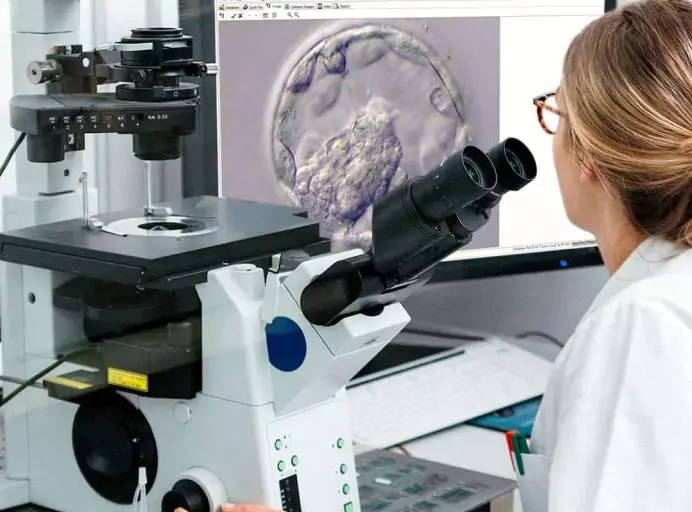
Embryos in the Legacy eSET Program are cultured to the five-day blastocyst stage, a critical
developmental milestone. While many embryos reach early cleavage stages, only a portion
progress to viable blastocysts, making extended culture an important quality filter.
Blastocyst culture allows embryologists to observe developmental dynamics over time,
supporting informed embryo selection. Assessment and grading are performed by highly
experienced embryologists using advanced laboratory equipment and standardized protocols,
ensuring consistency across cycles.
Adjunct Technologies
Depending on embryo characteristics and clinical indications, adjunct technologies may be applied selectively within the Legacy eSET Program. These may include:
- Laser-Assisted Hatching (LAH), to support implantation in selected cases
- Non-Invasive Embryo Testing (NITE), when appropriate
- Adjunct techniques are never applied automatically. Each decision is based on embryo development, grading, and clinical context, with the goal of enhancing outcomes without unnecessary intervention.
Genetic Safety & Carrier Screening
Genetic carrier screening may be performed on both the egg donor and the intended parent’s partner to reduce the risk of inherited genetic conditions. Screening typically involves blood or swab samples analyzed for known gene variants associated with recessive disorders. The standard required screening include:
- Fragile X
- Karyotype
- Cystic Fibrosis
- Spinal Muscular Atrophy (SMA)
If both donor and partner carry the same mutation, an alternative donor is selected. This approach supports embryo health while maintaining flexibility and continuity within the program.

Vitrification, Storage & Transfer Planning
Surplus embryos may be vitrified and stored for future use. Vitrification rapidly preserves
embryos at ultra-low temperatures, maintaining viability for subsequent transfers.
Embryo cryopreservation allows recipients to plan additional transfers without repeating the full
donor egg cycle and provides flexibility in timing based on medical readiness or personal
circumstances.
Clinical Success Parameters
From one or two blastocyst transfers, Legacy eSET donor egg cycles are associated with high
cumulative implantation and live birth rates, often reported in the range of 65–95%, depending
on individual medical circumstances.
These outcomes are influenced by several measurable clinical factors, including sperm quality,
the interaction between the egg and sperm during fertilization, embryo chromosomal status
(particularly when PGT-A is not performed), and endometrial receptivity at the time of embryo
transfer.
It is important to understand that success in donor egg IVF is not determined by a single
variable. Rather, outcomes reflect the combined effect of multiple controlled factors across the
entire cycle, from fertilization and embryo development to uterine readiness at transfer.
Program Timeline & Preparation Checklist
From donor coordination to embryo transfer, the Legacy eSET Program typically unfolds over one to two months. This timeframe includes donor matching, fertilization, embryo culture, recipient endometrial preparation and blastocyst transfer.
Each stage is coordinated by an Embryon fertility specialist, ensuring readiness, timing accuracy, and clear communication throughout the process.
Frequently Asked Questions
What makes the Legacy eSET Program different from standard donor egg IVF?
The Legacy eSET Program is designed around both medical probability and patient experience. Unlike standard donor egg IVF programs that typically provide a limited number of eggs, Legacy eSET offers a higher donor egg allocation, increasing the statistical likelihood of generating viable blastocysts.
This structure addresses a common concern among intended parents who have previously experienced low egg or embryo numbers during IVF.
At the same time, the program is centered on elective single embryo transfer, allowing one carefully selected blastocyst to be transferred at a time. This approach balances numerical confidence with medical precision, supporting strong implantation potential while reducing the risks associated with multiple pregnancies.
How many donor eggs are typically included in a Legacy eSET cycle?
Unlike standard donor egg IVF programs that commonly include six to eight eggs, the Legacy eSET Program is structured around a higher donor egg allocation — generally twelve to fifteen mature donor eggs. This approach increases the statistical likelihood of achieving viable blastocysts and reflects the program’s design philosophy: providing both medical probability and psychological reassurance, particularly for intended parents who have previously experienced low egg numbers during IVF.
How many embryos are usually created from donor eggs in the Legacy eSET Program?
When working with a donor egg allocation of twelve to fifteen mature eggs and adequate sperm parameters, a meaningful proportion of embryos typically progress to the five-day blastocyst stage. In Embryon’s advanced embryology laboratory, this often represents approximately 55–65% of fertilized eggs reaching blastocyst development.
While individual outcomes can vary and no specific result can be guaranteed, this range reflects what is commonly achieved under controlled laboratory conditions and supports informed embryo selection within the Legacy eSET Program.
Why is a blastocyst (5 day embryo) transfer preferred?
Blastocyst transfer is preferred because it allows for more accurate embryo selection and better synchronization with the uterine environment. By day five, embryos that reach the blastocyst stage have demonstrated stronger developmental potential, making it easier for embryologists to identify those most likely to implant successfully.
Transferring a blastocyst also mirrors natural conception timing, when the embryo normally reaches the uterus, and supports elective single embryo transfer — reducing the risks associated with multiple pregnancies while maintaining strong implantation potential.
Is ICSI always used in the Legacy eSET Program?
Yes. In the Legacy eSET Program, ICSI is used exclusively. No other fertilization method is applied in donor egg IVF or IVF for surrogacy. ICSI allows each mature egg to be fertilized in a controlled manner by directly injecting a single sperm cell, which significantly reduces the risk of fertilization failure that can occur with conventional insemination.
While ICSI supports reliable fertilization at the oocyte level, it does not determine whether embryos will continue to develop to day three or reach the blastocyst stage. Embryo development beyond fertilization depends on multiple biological factors, including egg and sperm quality. For this reason, ICSI is used to ensure controlled fertilization, while subsequent embryo development is assessed through extended culture within the embryology laboratory.
What happens if embryos stop developing before day five?
In the Legacy eSET Program, embryos are cultured with the goal of reaching the day-five blastocyst stage. A formal embryo assessment is typically performed around Day 3 to confirm that development is progressing appropriately. If embryos show clear developmental arrest, or if Day-3 development indicates a very low likelihood of reaching blastocyst, they are generally not considered suitable for transfer within a Day-5 program.
In such cases, embryo culture may be discontinued and embryos may be discarded according to laboratory viability criteria and applicable regulations.
Is genetic carrier screening part of the Legacy eSET Program?
Genetic carrier screening is strongly recommended, but it is not mandatory, within the Legacy eSET Program. Egg donors are screened according to required genetic panels; however, expanded carrier screening of the intended parent’s partner (sperm source) provides additional, valuable information for planned parenthood.
Modern preconception expanded carrier screening panels can test for thousands of mutations across hundreds of genes, with some commercial genetic labs offering screening for over 700 genetic conditions. The specific number varies by laboratory and panel type.
Your partner may be an asymptomatic carrier without any family history. By screening the partner first, the embryology and genetics team can determine whether it is necessary to DNA sequence your egg donor to ensure they do not carry a mutation in the same gene as your partner.
If both your partners and donor are carriers of the same recessive condition, alternative donor selection is necessary.
Even with comprehensive screening, no test can eliminate all genetic risk. For this reason, carrier screening is presented as a risk-reduction tool rather than a guarantee, supporting informed decision-making within the program.
Can embryos be frozen for future use?
Yes. All remaining embryos are vitrified and stored (cryopreseved and cryostored) for future transfers.
How long does preparation for the Legacy eSET Program take?
Preparation for the Legacy eSET Program typically takes one to two months, but the exact timeline depends primarily on cycle type and required testing, rather than simple coordination.
For women with a regular menstrual cycle, endometrial preparation usually takes approximately 14–21 days. For women without a regular cycle, or those who have not menstruated for an extended period, preparation is performed using an artificial cycle. In these cases, an initial induced period is often recommended to allow the endometrium to shed, regenerate and rebuild, with a second endometrium preparation starting during the following cycle.
In parallel, required medical and genetic testing—particularly expanded genetic screening of the sperm source—may take up to 4–5 weeks, depending on laboratory turnaround times. These factors together determine the overall preparation timeline and are planned in advance to ensure optimal endometrial readiness at the time of embryo transfer.
What factors most influence success in the Legacy eSET Program?
Success within the Legacy eSET Program is influenced primarily by sperm quality, embryo development dynamics, endometrial receptivity, and physician expertise during embryo transfer. Donor egg quality is a controlled constant within the program, as all donors are young, carefully selected, and medically screened according to strict criteria.
Sperm quality plays a significant role in fertilization and early embryo development, including the risk of DNA fragmentation, which can affect whether embryos continue developing beyond the early stages.
Another key determinant is endometrial receptivity, which reflects the uterus’s biological readiness to accept an embryo. While thickness is assessed, receptivity depends on a broader hormonal and molecular environment rather than measurement alone.
Finally, the experience of the physician performing the embryo transfer is critical. Precise embryo placement within the uterine cavity, performed by an experienced clinician using established protocols, directly influences implantation potential and overall outcomes.
If you would like further clarification on any aspect of the Legacy eSET Donor Egg Conception Program, or wish to discuss how the program may apply to your individual medical history, our team is available to guide you. A consultation allows us to review your circumstances, answer specific questions, and outline realistic next steps based on your needs and prior fertility journey.

- Dr. Vira Yuriivna Sirenko
- Obstetrician-Gynecologist, Fertility Specialist – Medical Content Reviewer
Dr. Vira Yuriivna Sirenko is an obstetrician-gynecologist and fertility specialist with a Candidate of Medical Sciences degree and over 30–40 years of experience in reproductive medicine. She specializes in the diagnosis and treatment of infertility, modern assisted reproductive technologies including IVF, and gynecological endocrinology. She practices at the Dakhno Institute of Reproductive Medicine in Kyiv, combining fundamental scientific research with active clinical practice.
- Last Updated: 26 August 2026
- Medically Reviewed
- Evidence-based