


How to Bring Your Baby Home After Surrogacy in Ukraine
Countries That Allow Surrogacy Abroad for Their Citizens — and What Is Required to Bring the Child Home
Introduction
International surrogacy requires not only careful medical planning but also precise legal and administrative preparation. Every country has its own rules for establishing parentage, obtaining citizenship, issuing passports, and authorizing the newborn’s travel. This guide presents a clear, step-by-step roadmap for Intended Parents completing a surrogacy journey in Ukraine, followed by a country-by-country summary of what is required to bring your child safely home.
Embryon Family Fertility Center has guided hundreds of Intended Parents through the post-birth legal and administrative process in Ukraine. Our team provides step-by-step support, helping families navigate embassy procedures, document preparation, sworn translations, and parentage recognition. While every country has different legal pathways, we ensure parents understand exactly what is required to bring their baby home safely and in full compliance with international surrogacy regulations.
Step-by-Step Guide After Surrogacy In Ukraine
Step 1 — Obtain the Ukrainian Birth Certificate
Immediately after birth, Embryon assists with coordination between the maternity hospital and civil authorities to issue the Ukrainian Birth Certificate. This foundational document is required for all subsequent legal, consular, and citizenship steps.
Step 2 — Establish Legal Parentage
Your home country may require:
- A Ukrainian Court Parentage Decision
- A surrogate’s notarized consent
- A paternity acknowledgment (e.g., Germany: Vaterschaftsanerkennung)
- A DNA test to confirm the genetic link
Embryon assists administratively but does not provide legal representation.
Step 3 — Apply for Citizenship or Registration
Depending on your national laws, you will apply for citizenship-by-descent or civil registration of the child, using the Birth Certificate, DNA results (if required), and parentage documents.
Step 4 — Apply for Your Baby’s Passport
Once citizenship is confirmed or acknowledged, your embassy or consulate will issue:
- A national passport, or
- An emergency travel document
Requirements may include translations, apostilles, parent IDs, and proof of parentage.
Step 5 — Exit Documentation (if Required)
Some authorities may require:
- Travel consent documents
- Proof of legal parentage
- Additional notarial confirmations
Step 6 — Fit-to-Fly Medical Clearance
A pediatrician may need to confirm that your newborn is medically stable for international travel.
Step 7 — Travel Home
Before departure, parents should prepare:
- Baby’s passport / travel document
- Original and translated birth certificate
- Court parentage decision (if applicable)
- DNA results (if applicable)
- Medical discharge papers
- Copies of all documents
Ireland: A Quick Look at International Surrogacy Laws
- Surrogacy in Ireland is currently a bit of a Wild West situation—it's unregulated, which creates quite a challenge for Irish parents looking to pursue surrogacy options abroad. Right now, only the biological parent is recognized at birth, meaning that when intended parents return to Ireland, legal parenthood isn’t automatically granted to both of them.
- There's some hope on the horizon, though! The proposed Health (Assisted Human Reproduction) Bill aims to create a more structured framework that will also cover international surrogacy agreements. If parents find themselves in this situation, they’ll typically need to obtain an emergency travel certificate from an Irish embassy or consulate to bring their child back home. After that, they have to apply to the Irish courts for a parental order within 28 days to six months after the birth.
- The proposed rules come with some pretty strict conditions. For instance, the surrogacy must take place in a country that's on an approved list, at least one of the intended parents must have a genetic link to the child, and the surrogate can't use her own egg. Plus, this framework is based on a non-commercial model, meaning that only expenses can be reimbursed. If any arrangements fall outside these guidelines, they might not be recognized, which could lead to issues with legal parenthood.
- This is particularly important for international surrogacy, as many countries operate on a commercial basis, which might clash with the proposed Irish standards. However, there is a silver lining: the High Court may grant retrospective recognition for children already born through surrogacy abroad, as long as certain conditions are met and it’s in the child’s best interests.
- So, while the landscape is changing, it’s clear that navigating surrogacy in Ireland still requires careful planning and understanding of the legal intricacies involved.
Country-by-Country Requirements

Germany
Required:
- Ukrainian Birth Certificate
- Vaterschaftsanerkennung
- DNA test (if required)
- German passport
- Ukrainian Court Parentage Decision
Austria
Required:
- Ukrainian Birth Certificate
- Proof of Austrian citizenship
- Citizenship-by-descent application
- Passport
- Court Recognition

France
Required:
- Ukrainian Birth Certificate
- Sworn French Translation
- Civil Registry Transcription

Ireland
Required:
- Ukrainian Birth Certificate
- DNA Confirmation
- Declaration of Parentage
- Emergency Travel Certificate or Irish passport
- Post-return parentage or guardianship procedure
Notes: Ireland requires DNA proof for citizenship-by-descent. Full legal parentage may require additional steps after return.

United Kingdom
Required:
- Ukrainian Birth Certificate
- DNA Confirmation
- UK Passport
- Parental Order
Spain
Required:
- Ukrainian Birth Certificate
- DNA Proof
- Recognition of Biological Parent
- Adoption/recognition for Non-genetic Parent

Italy (High Legal Risk)
Required:
- Ukrainian Birth Certificate
- DNA Proof
- Court Recognition
- Adoption for Non-genetic Parent
Netherlands
Required:
- DNA Proof
- Recognition of Parentage
- Adoption/Court Order

Belgium
Required:
- Ukrainian Birth Certificate
- DNA Confirmation
- Belgian Registration
- Court Recognition or Adoption

Switzerland
Required:
- DNA Evidence
- Ukrainian Birth Certificate
- Civil Registry Recognition
Nordic Countries
Required:
- Ukrainian Birth Certificate
- DNA Confirmation
- Passport/Citizenship-by-Descent
- Adoption or Recognition
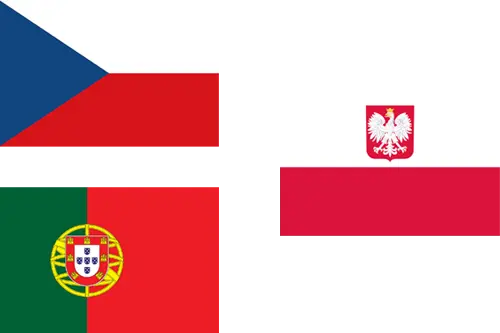
Poland, Czech Republic, Portugal
Required:
- Ukrainian Birth Certificate
- DNA Confirmation
- Court/Consular Recognition
- Adoption for Non-genetic Parent

Greece
Required:
- Ukrainian Birth Certificate
- DNA Confirmation
- Greek Recognition Procedure

Australia
Required:
- Ukrainian Birth Certificate
- DNA Evidence
- Citizenship-by-descent Application
- Passport
- Adoption/Parentage Steps

United States
Required:
- Ukrainian Birth Certificate
- DNA confirmation (mandatory)
- Consular Report of Birth Abroad (CRBA)
- U.S. passport or emergency travel document
- Proof of U.S. citizenship of the genetic parent
Notes: The United States requires mandatory DNA testing to establish a biological link between the child and the U.S. citizen parent. Citizenship is typically granted by descent through the genetic parent. Once the CRBA is approved, a U.S. passport or emergency travel document is issued, allowing the child to travel home.

Israel
Required:
- Ukrainian Birth Certificate
- DNA confirmation (mandatory)
- Israeli Consular registration
- Temporary Israeli travel document (Laissez-Passer)
- Family Court parentage recognition in Israel
Notes: Israel requires mandatory DNA testing to confirm the genetic link. Legal parentage is finalized through the Israeli Family Court after return.

Romania
Required:
- Ukrainian Birth Certificate
- Sworn Romanian translation
- DNA confirmation
- Registration with Romanian Civil Status Authority
- Romanian passport or emergency travel document
Notes: Romania typically recognizes the genetic parent first. Additional court or administrative steps may be required for the non-genetic parent.
Slovenia
Required:
- Ukrainian Birth Certificate
- Sworn Slovenian translation
- DNA confirmation
- Court or administrative recognition of parentage
- Slovenian travel document or passport
Notes: Surrogacy is not regulated domestically; therefore, recognition of parentage is handled on a case-by-case basis after return.
Checklist: Documents Needed
- Ukrainian Birth Certificate
- Sworn Translations
- DNA Results (if Required)
- Court Parentage Decision
- Passport Application Documents
- Medical Discharge Papers
- Copies of All Notarized Forms
The post-birth process can feel overwhelming, especially for first-time Intended Parents pursuing international surrogacy. Understanding these procedures in advance—citizenship, passports, DNA verification, and court recognition—helps families avoid delays. Embryon’s administrative team remains available throughout this period to coordinate documents, answer questions, and guide you through each step required by your home country.

Disclaimer
Laws governing surrogacy, parentage, citizenship, and travel documentation vary by country and are subject to change without notice. Parents must verify all requirements with their embassy, consulate, and independent legal counsel prior to travel and submission of any documents. Embryon provides administrative guidance only and does not provide legal representation.

- Dr. Vira Yuriivna Sirenko
- Obstetrician-Gynecologist, Fertility Specialist – Medical Content Reviewer
Dr. Vira Yuriivna Sirenko is an obstetrician-gynecologist and fertility specialist with a Candidate of Medical Sciences degree and over 30–40 years of experience in reproductive medicine. She specializes in the diagnosis and treatment of infertility, modern assisted reproductive technologies including IVF, and gynecological endocrinology. She practices at the Dakhno Institute of Reproductive Medicine in Kyiv, combining fundamental scientific research with active clinical practice.
- Last Updated: 26 August 2026
- Medically Reviewed
- Evidence-based