


What to Expect After Your Blastocyst Transfer
A Step-by-Step Guide to Post-Embryo Transfer
Essential Information to Consider After Your Embryo Transfer
The nine days between your embryo transfer and your pregnancy test is one of the most nerve-wracking journeys on this path! As you wait for the results, it’s natural to become fixated on any physical sensations or changes and the inevitable mix of hope and anxiety that can be tough to balance.
To reduce some of this tension, it’s useful to find out what may happen after your transfer. Some people report physical symptoms cramps, bloating, and fatigue, which can all be attributed to the tracker user, whereas others notice very little difference.
You can also try some stress-reducing techniques. Gentle movement, such as gentle walking or yoga, can help you relax, and mindfulness-based exercises or meditation may also help you quiet your mind.
Having a circle of supportive friends or family who ‘get it’, can provide you with comfort and solace. This time of the "wait" is part of your journey, and taking care emotionally as you do physically.
IVF Embryo Transfer: The Day of Transfer
On the day of your embryo transfer, anticipate a simple procedure. Generally, there is no
need for sedation or anesthesia. Your physician will review the quality and number of the
blastocyst embryos that have been created and will offer a detailed explanation of the
procedure.
For more information, please refer to: Egg Donation.
Single Embryo Transfer program: we focus on transferring a single blastocyst-stage embryo.
The clinical pregnancy rate for these embryos begins at 65%. Our success rates in most cases
exceed 86%. Several factors can influence the likelihood of successful implantation,
pregnancy, and live birth. These include the readiness and receptiveness of your
endometrium, along with your stress levels.
How Long Does an Embryo Transfer Take?
Embryo transfer is a fast process that typically only takes 20 to 30 minutes. It is during this time that the physician will use an ultrasound-guided tiny tube, which contains the embryo(s), to transfer them into the uterus in such a way that they lie on top of the endometrial lining. This meticulous process ensures a gentle transfer of the embryos. (clip) Following the transfer, you will be asked to rest for an hour or so, but only because we want you to relax since this is a minimally invasive process. The whole process, from start to finish, preparation, recovery, and transfer generally takes about two hours, depending on how many other women have been scheduled for embryo transfers that day


Suggestions to Enhance Success After an Embryo Transfer
You can take several steps to increase the likelihood of a successful embryo transfer.
- Good fats and antioxidants: Good fats, whole grains, and antioxidant-rich foods can greatly improve fertility
- Keeping to a healthy weight and perhaps taking appropriate supplements can also help you along your fertility journey.
- Acupuncture: This technique may help reduce stress, boost uterine contractions, and increase blood circulation to the uterine lining. We recommend scheduling one session before an embryo transfer, to increase blood flow. After your transfer, one or two more sessions should be adequate until your Beta hCG pregnancy test.
- Living well is important when you are trying to conceive. "You want to keep stress levels down by managing workloads, staying well-hydrated, adding in electrolytes to your diet, not overdoing it on the caffeine count, and keeping things moving with consistent movement and proper rest. Taking care of your mental well-being and establishing the mind-body connection is essential in this process.
How long do I have to wait before taking my Beta hCG test?
Following your blastocyst transfer, you'll have nine-days before your initial Beta test. Based on the results, you may need to take a second Beta, possibly a third, if the first two tests indicate a positive outcome to confirm the pregnancy. This waiting period is often referred to as the "two-week wait."
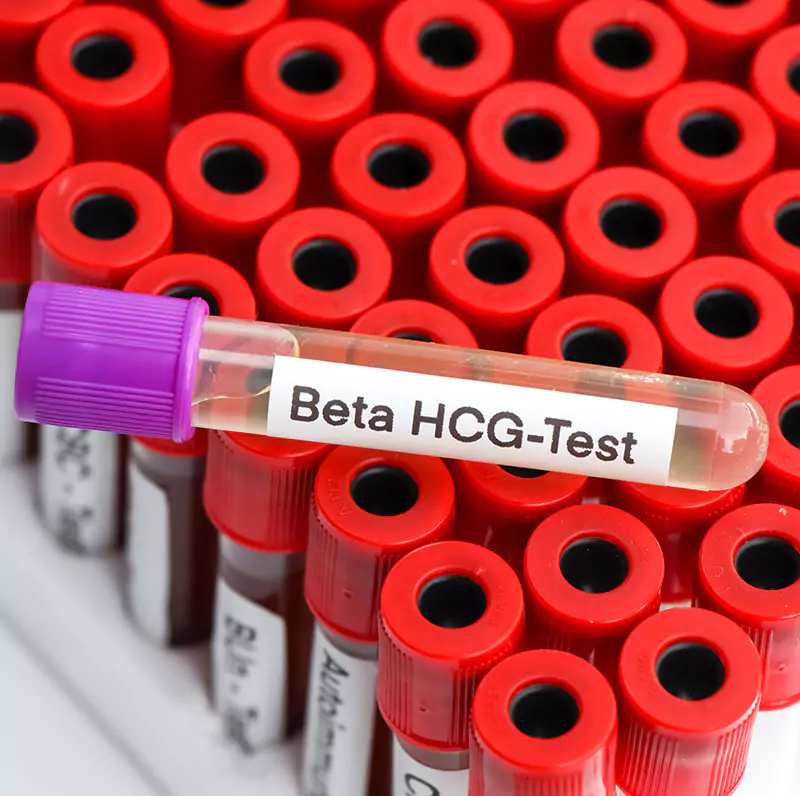
Here’s a day-by-day overview of what occurs following an embryo transfer:
Implantation begins 48 to 72 hours post-transfer. There are four stages to implantation:
- Day 1 and 2: The blastocyst is free of its protective ‘Zona’ and starts to implant in the uterine wall.
- Day 3: The implantation process begins when the blastocyst burrows deeper into the uterine lining.
- Day 4 and 5: Implantation continues and finalizes. At this point, the cells that will eventually become the placenta and fetus begin to develop.
- Day 6: The hCG hormone begins to be produced.
- Day 7 and 8: Further continued development. How large is the blastocyst? 91 hCG detection in maternal serum and urine. The higher level of hCG spreads to the bloodstream.
- Day 9: hCG levels could potentially confirm pregnancy.
Beta hCG Results: What hCG level is indicative of pregnancy?
Between women and between pregnancies, beta-hCG levels can vary widely. There are some general guidelines to consider: HCG levels on day 9th days after blastocyst transfer can vary from 50 to 100 mIU/mL. Low levels could indicate a failed implantation or an early (biochemical) pregnancy, while higher HCGs may be consistent with a multiple pregnancy if more than one blastocyst was transferred.
Common Symptoms After Embryo Transfer
Even though an embryo transfer is typically a simple process and not something that someone would consider to be in need of recovery, it is normal to have symptoms afterwards. Give yourself time to rest when you need it. Following is a (non-exhaustive) list of the most common symptoms reported by women after having an IVF transfer. If any of these symptoms seem to be getting severe, seek medical help immediately.
Cramping Following an Embryo Transfer
Cramping after embryo transfer is a way of telling whether it was successful, but it can be challenging as you come to realise that your period is due,or it was implanted effectively. Both types of hormones cause cramping, so it’s quite common. Furthermore, Some women are more sensitive and can get cramping after any pelvic procedure.
Bloating After an Embryo Transfer
What bloating may be caused by the medication for hormonal support and elevated progesterone in the body? Though this can be an exciting symptom of pregnancy because it could also signify a hormone spurt, and other things are causing your bloating.
Sore Breasts Following an Embryo Transfer
Breast soreness can be an early sign of pregnancy, but it is also a side effect of the fertility medications you’ll take in general during the two-week wait. Progesterone and estradiol can both give you swollen, tender breasts and even a feeling of fullness or slight soreness, so this is a common complaint after an embryo transfer.
Fatigue Following an Embryo Transfer
Women often feel tired or fatigued after an embryo transfer, and this may persist as a mild feeling of fatigue throughout the first week. Though tiredness is a common pregnancy symptom, the rise in progesterone can lead to feelings of excessive tiredness and dizziness for most patients.
Vaginal Discharge after an Embryo Transfer
You may notice changes in your discharge during the week following an embryo transfer. It’s normal to have more discharge in early pregnancy because it helps prevent infections from travelling upward from the vagina to the womb. Healthy vaginal discharge is typically thin, clear or milky white and has a slight odor.
Increased Urination Following Embryo Transfer
Increased Urination: A frequent need to pee can be early sign of pregnancy, caused by rising levels of the hormone hCG and increased blood flow to your pelvic area. When pregnancy occurs after a successful embryo transfer, the body is simply producing more blood and causing more trips to the bathroom.
It is important to differentiate between feeling like you have to go more often and a urinary tract infection (UTI), which may include such symptoms as fever, bleeding, urgency that appears stronger than normal sensation, nausea or vomiting and discomfiture.
Symptoms One Week After-Embryo Transfer
In this section, we want to tell you about the most common symptoms that women can experience after seven days of embryo transfer. So, if you are feeling these symptoms it could mean that the transfer has achieved success.
Light Pink Bleeding One Week After Embryo Transfer
Light bleeding can be observed after embryo transfer and may indicate a successful implantation with pregnancy. For both natural and IVF pregnancies, bleeding with embrio implanation is a normal symptom–this being when the embryo implants into the uterine wall. Spotting and bleeding can be a source of anxiety and worry for many women on their TWW, however it can also be a good sign for those who are trying to get pregnant.
Some light spotting or a brownish-pink discharge is very normal and can continue for 1-2 days. This brownish discharge can be its result, as it’s the older blood that stayed in your lady parts. If you see a lot of bleeding like you’re having your menstrual cycle, or if it’s bright red blood, be sure to alert your fertility specialist. These symptoms may be warning signs that something's wrong, like a miscarriage or ectopic pregnancy.
Lower Back Pain One Week After-Embryo Transfer
Some women may also feel lower back pain 7 days after embryo transfer similar to what they experience during the menstrual cycle. This pain may be associated with hormonal changes, ovarian stimulation and endometrial preparation, which can cause cramps and discomfort in lower back. dizziness, pain and tingling are also fairly usual during this period
Embryo Transfer and No Symptoms: Is It Possible?
It is important to bear in mind that no more than <15% of women will experience any symptoms after embryo transfer (despite their Prog and E2 levels) even if pregnancy should occur. When the level of hCG in blood or urine peaks around 10-12 weeks. Without symptoms or with only mild symptoms -it's normal not to have any symptoms during this time, and many women find themselves in this situation.
On Day 9 As hCG Levels can be detected in your body, on a Pregnancy Test, You should test for pregnancy, and it will be high enough to show up. Values above 200 mIU/ml confirms pregnancy, and levels over 600 mIU/ml may indicate multiple pregnancies.
Beta hCG Pregnancy Test
The Beta test (pregnancy) is a pregnancy test performed nine days following embryo transfer to confirm that the woman is pregnant. The test, which requires a blood sample to measure the levels of a chemical produced by cells that line the outside of a blastocyst, something always present in early embryos and that will eventually become part of the placenta.
Given the whirlwind of emotions associated with Egg Donation from stress and anxiety to
excitement and hope—it can be incredibly tempting to take a pregnancy test sooner than
recommended. However, waiting nine days is crucial for obtaining reliable results. Testing
before this period can result in misleading outcomes due to the fluctuating hormone levels in
your body.
Embryo Transfer FAQs
Exploring the Uncertainties Surrounding Egg Donation and Surrogacy in Ukraine.
Can two embryos thrive in one uterus?
Many people are aware that fertility treatments can lead to multiple births, and many
prospective parents wonder if transferring more than one embryo increases the chances of a
successful pregnancy. Typically, fertility specialists prefer to transfer a single embryo at a
time. However, in certain situations, transferring two embryos may be a feasible option that
enhances the likelihood of pregnancy. It is certainly possible for two embryos to successfully
implant and grow within a single uterus.
Do frozen embryos take longer to implant?
The process of creating fresh and frozen embryos is the same, so the time it takes for them to
implant is similar. When an embryo is transferred to the uterus, whether fresh or frozen and
thawed, The schedule continues to be steady. A frozen embryo, which is cryopreserved on
Day 5 of its development, is at the same stage as a fresh embryo on Day 5 when thawed.
Frozen embryos can be more convenient, especially if your endometrial lining is not yet ready
for transfer. The ability to freeze embryos allows you to wait until your endometrium is
optimal before thawing the embryos for transfer. Those at risk for ovarian hyperstimulation
syndrome (OHSS) should avoid fresh transfers. Overall, there is no difference in implantation
time between fresh and thawed frozen embryos.
Is bed rest necessary after an embryo transfer?
After undergoing an embryo transfer, strict bed rest is not required; however, it's perfectly
okay to take a break and rest.
Light activities can enhance blood flow and help decrease inflammation, promoting healthier
recovery.
It is important to avoid certain activities during this time?.
Engaging in intense workouts, having sexual intercourse, or exposing yourself to hot baths,
sunbathing, or high temperatures should be avoided.
On a Personal Note, from The Embryon Family
It's completely normal to feel overwhelmed by the amount of information
available, and it's important to remember that you can't solely depend on
your emotions. The Embryon Family is here for you 24/7 to answer any
questions you may have. We provide vital information, emotional support,
and steadfast reassurance whenever you need it. After all, that’s what family
is all about.
Still have questions?
Our Embryon Family Fertility experts are ready to help you navigate this
emotional and often confusing journey. Don’t hesitate to reach out through
this link, or you can contact us via WhatsApp at +380 (97) 597-2636.
Ira Nissel - Founder

- Dr. Vira Yuriivna Sirenko
- Obstetrician-Gynecologist, Fertility Specialist – Medical Content Reviewer
Dr. Vira Yuriivna Sirenko is an obstetrician-gynecologist and fertility specialist with a Candidate of Medical Sciences degree and over 30–40 years of experience in reproductive medicine. She specializes in the diagnosis and treatment of infertility, modern assisted reproductive technologies including IVF, and gynecological endocrinology. She practices at the Dakhno Institute of Reproductive Medicine in Kyiv, combining fundamental scientific research with active clinical practice.
- Last Updated: 26 August 2026
- Medically Reviewed
- Evidence-based