Hormonal Changes in Pregnancy & Postpartum: What Surrogates Can Expect & How to Adjust

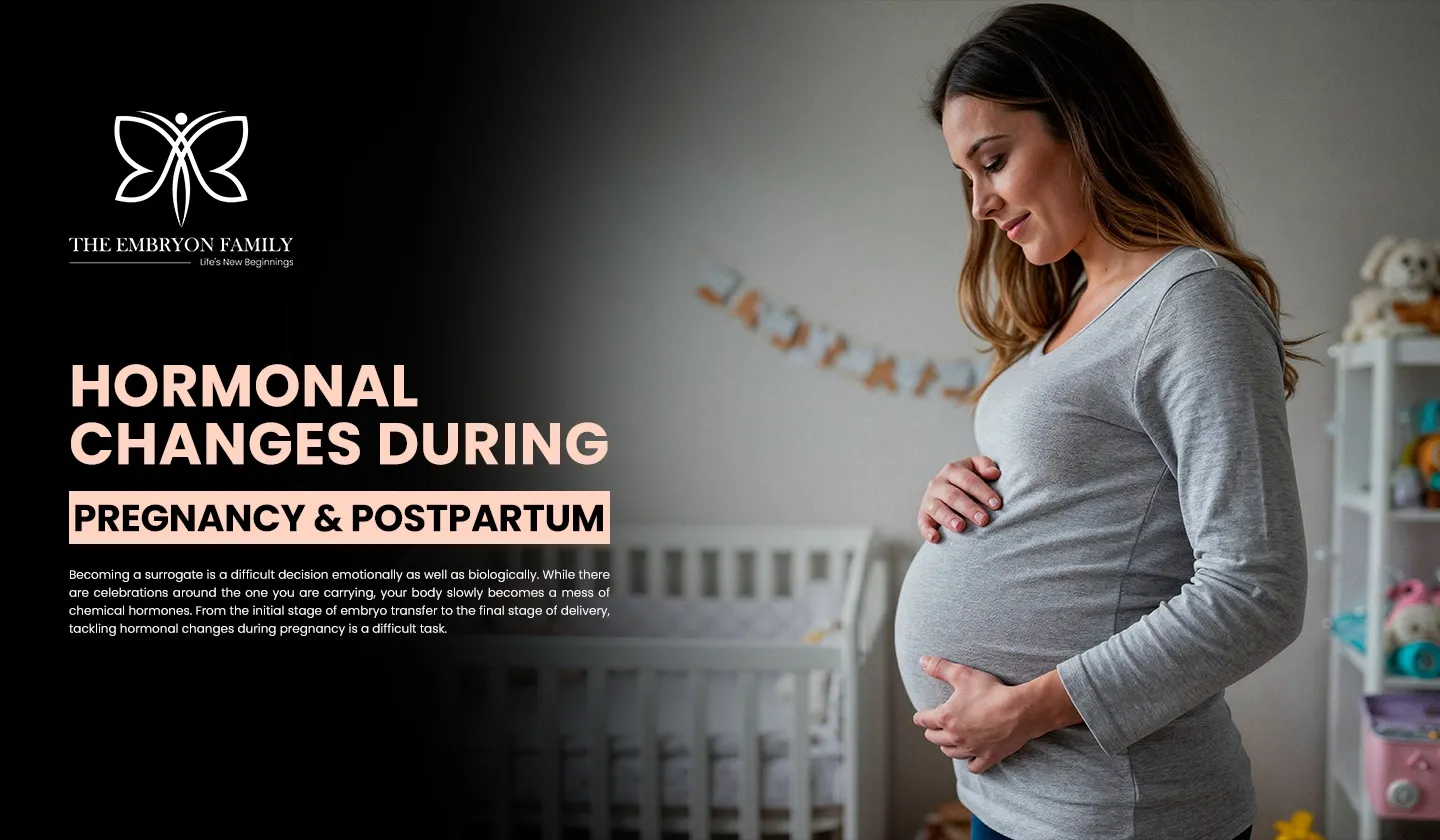
Becoming a surrogate is a difficult decision emotionally as well as biologically. While there are celebrations around the one you are carrying, your body slowly becomes a mess of chemical hormones. From the initial stage of embryo transfer to the final stage of delivery, tackling hormonal changes during pregnancy is a difficult task. There are …

hormonal changes during pregnancy

Share

Becoming a surrogate is a difficult decision emotionally as well as biologically. While there are celebrations around the one you are carrying, your body slowly becomes a mess of chemical hormones. From the initial stage of embryo transfer to the final stage of delivery, tackling hormonal changes during pregnancy is a difficult task. There are signs that orchestrate everything about your physical health and the overall mood swings during pregnancy. By understanding your endocrine system, you can turn this difficult phase into a graceful one. So, let’s understand how to challenge emotional changes during pregnancy like a boss.

Why do these Hormonal Shifts Happen?

These dramatic chemical imbalances happen because you are supporting one foreign life while safeguarding your own system. Hormonal changes in surrogates are different, and the imbalance takes a different turn after natural production enters a state of hyperdrive. It’s the survival instinct when the body is preparing to accommodate the baby’s needs over the mothers by taking care of the baby’s nourishment, growth, and safety.

The Hormonal Architecture of Pregnancy

After conception, a surrogate mother experiences these hormonal changes. Doctors help her understand the concept of estrogen and progesterone, often referred to as “supplemental hormones.” These two hormones help in ensuring that the baby is ready to receive safety and nourishment. Your body does all the hard work, hence producing a cocktail of hormones at levels you never have experienced before. These internal hormonal changes during pregnancy affect every organ from your tiny heart to your nervous system.

The Power of Estrogen and Progesterone

These two stellar hormones are architects of your pregnancy. Estrogen rises gradually, reaching from a base of 100 to sometimes 1,000 times your actual baseline. Due to which the uterus grows from a mere 70 g organ to 1,100 g by term. It is also the primary reason that affects hormonal changes during pregnancy. Estrogen controls the mood, which explains why one minute you are jolly and another minute you have a sudden shift in mood swings during pregnancy.

Progesterone, on the other hand, is called the “pregnancy hormone,” which goes up to 10 to 20  times in comparison to average levels. This hormone helps in relaxing the uterine muscles to prevent any premature birth due to contractions. Progesterone is also the natural sedative that helps in establishing a connection with GABA receptors present in the brain. Because of this, surrogate mothers might feel intense fatigue, lethargy, or “pregnancy brain.”

These physical signs tell us why mothers have so varied mood swings during pregnancy and most probably throughout the three trimesters.

Managing Emotional Changes

The emotional changes during pregnancy are chemical shifts that make you believe that you are giving your life to somebody else. Surrogacy requires a high degree of emotional intelligence and strong compartmentalization to do so. You need to balance your emotional side like a full-time job regardless of your boss’s behavior. It’s the body’s response to bearing a child, not your nervousness in showing commitment. Don’t ignore these emotional changes during pregnancy. Instead, try to maintain a healthy mental state at all times.

Navigating the Postpartum Horizon

The journey finally comes to a beautiful end with the birth of the child. Intended parents are given their child, and what ends is the physical labor alone. Along with that, the biological cycle takes a full turn and starts again. There is a dramatic shift in hormonal changes in the body after postpartum, and in medical terms it’s called “biological withdrawal.”

The Hormone Crash

After 24 to 48 hours of delivery, the two main hormones that sustained the baby successfully start to decline precipitously, often called the “hormone cliff.” And for a surrogate mother, these hormonal changes postpartum can be intense physically. It takes time to go back to everyday life without the baby’s presence; these hormones crash and become isolated.

Understanding the Postpartum Shift

Postpartum hormonal changes can be intense as you have just left your child with somebody else. Baby blues affect 50 to 80% of the women after birth. From common symptoms like weakness, weepiness, anxiety, and restlessness to feeling not sleepy at all. Sometimes, these symptoms go away after a few weeks on their own. It’s the body’s way of recalibrating its neurochemistry after nine months.

The third essential hormone that plays a major role in stimulation of contractions is oxytocin. It’s often called the “bonding hormone,” which peaks during the end for pushing out the child. Estrogen, progesterone, and oxytocin all come back to normal cycles and experience emptiness. A surrogate mother needs to understand these hormones postpartum to manage her feelings without any guilt or stress.

Restoring Balance - The Physical Road to Recovery

A surrogate mother needs extra care and attention to recover after birth. As she doesn’t have that bond with the baby and needs to focus on her health alone. The uterus takes approximately six weeks to recover and become its original size, leading to a decrease in pregnancy hormones.

Learning about hormonal changes during pregnancy can help her recover well and overcome long-term fatigue quickly. Other glands, like thyroid and adrenal, are also recalibrating. These were working overtime during the last trimester and needed active rest to transition from the high-intensity pregnancy phase. Addressing concerns about emotional changes during pregnancy can ensure better recovery. It can also help you manage any lingering mood swings during pregnancy as you move on with life.

The Role of Prolactin and Pituitary Health

Your body doesn’t know the surrogacy process, as it will process prolactin after giving birth. Pituitary glands help in producing prolactin, which can affect your health if not pumped out. Suppressing lactation can add stress to the prolactin levels, leading to postpartum hormonal changes. For this, you need to take certain steps that can provide you physical comfort and help you manage hormones postpartum effectively without any effect on sleep or appetite.

How to Make the Transition—Steps to Recovery?

The main aim of the recovery program is to help the surrogate deliver the baby and manage her health as well. For this, you need to treat your postpartum period the same as your pregnancy.

Prioritize Endocrine Health

Hormones work with fats and proteins. You need to restore these deposits after delivery. So, don’t hop on junk food; instead, eat nutrient-dense foods.

  • Eat healthy fat from avocados, nuts, and olive oil to keep the right build-up of hormone production.
  • Stabilize your blood sugar levels by using only whole grains that prevent crashes leading to mood swings.
  • Zinc and magnesium are necessary to regulate hormonal shift postpartum. Focus on micronutrient intake that will support adrenal glands.
  •  Lastly, drink plenty of water to flush out toxins and medications out of your body.

Rest and Gentle Movement

Secondly, hormonal shift postpartum affects your joints and ligaments. So, make sure you get adequate rest to relax your body after birth, as it takes five months to fully stabilize the system. Don’t rush to gym classes to get back into shape, as it will lead to injuries. Focus on a relaxed pace after medical clearance to boost endorphins—your body’s natural mood lifters.

Get Support from Friends and Family

Lastly, you need to ask for proper guidance and support from your loved ones. Don’t hesitate to reach out in confusion and compromise on feelings; it’s essential to seek professional help. Postpartum depression affects 10 to 20% of women globally, and it’s a clinical condition that leads to a hormonal shift postpartum.

Conclusion

The surrogacy process is complicated, and the biology behind it is even more complicated. That’s why you need to understand hormones postpartum to ensure you lead a happy life and restore balance in your body. Seek medical guidance and counseling to recover from postpartum stress and hormonal changes. Take a proper diet and make simple lifestyle changes to thank yourself for the life you created for another family.

FAQ's

How long do postpartum changes last?

Mostly, these changes drop after 48 hours, but it takes about five months to completely recover and relax. The recovery period is different from one person to another.

Yes, physiologically it’s the same, but the surrogate mother experiences the baby blues as she doesn’t have a child with her.

Yes, you can recover faster with a proper diet, sleep, and adequate intake of vitamins. Proper guidance and support can help you recover in a shorter time.

No, the medicines are flushed out after use, but early pregnancy symptoms can be more pronounced.

If the recovery process is difficult and takes more than 14 days, you need to seek medical help.

Ira Nissel

Ira Nissel

Ira Nissel, the Founder and CEO of The Embryon Family, is a native New Yorker currently residing in Kyiv, Ukraine, where he guides couples and single women on their journey to parenthood. Read his story...
Table of Contents
Share
Ira Nissel

Ira Nissel

Ira Nissel, the Founder and CEO of The Embryon Family, is a native New Yorker currently residing in Kyiv, Ukraine, where he guides couples and single women on their journey to parenthood. Read his story...
Share
Ira Nissel

Ira Nissel

Ira Nissel, the Founder and CEO of The Embryon Family, is a native New Yorker currently residing in Kyiv, Ukraine, where he guides couples and single women on their journey to parenthood. Read his story...

Leave a Reply

Your email address will not be published. Required fields are marked *

error: Content is protected !!