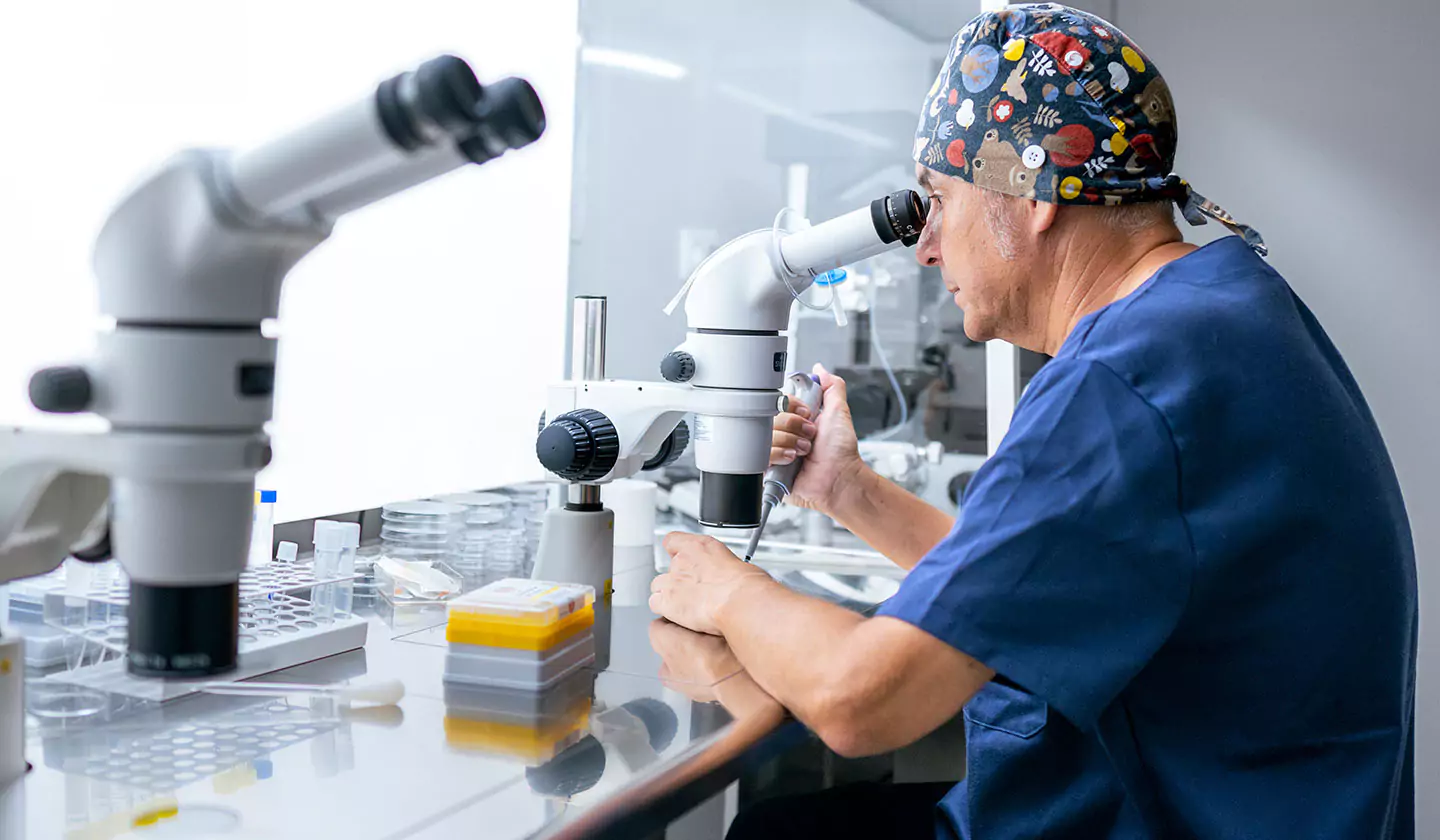
Blastocyst-stage extended culture | Day 5 or Day 6 embryo transfer

What is a Blastocyst? A blastocyst is an embryo that has matured in a laboratory setting for at least five days following egg retrieval, developing into two distinct cell types. The outer layer of cells, known as the trophectoderm, will eventually form the placenta, while the inner cell mass will develop into the fetus. A …

blastocyst-stage-extended-culture-day-5-or-day-6-embryo-transfer

Share

What is a Blastocyst?

A blastocyst is an embryo that has matured in a laboratory setting for at least five days following egg retrieval, developing into two distinct cell types. The outer layer of cells, known as the trophectoderm, will eventually form the placenta, while the inner cell mass will develop into the fetus. A healthy blastocyst typically breaks free from its protective shell (zona pellucida) by the sixth day or sooner, preparing itself for implantation into the uterine lining.

Blastocysts have successfully passed a crucial “survival test.” In the initial days, the embryo depends entirely on the nutrients from the egg cell provided by the mother. However, to continue growing beyond days three or four, the embryo must activate its own genes for further development. Unfortunately, not all embryos can surpass this stage, with only about one-third progressing to the blastocyst phase. If an embryo successfully reaches this stage in vitro, it suggests that nature has indicated these embryos are the result of a “survival of the fittest” scenario.

Research shows that transferring blastocyst embryos to the uterus five or six-days post- egg retrieval leads to higher implantation rates compared to transferring embryos at day three. An embryo that reaches the blastocyst stage has a greater likelihood of successful implantation, assuming the uterine environment is healthy. This increased success rate is thought to stem from selecting the “best” embryos during the blastocyst transfer process.

Developing Embryos to the Blastocyst Stage

In the past, during an IVF cycle, embryos were typically transferred to the uterus on the second or third day after fertilization, coinciding with the early stages of cell division. However, the embryology team at BetaPlus Fertility has made significant strides in enhancing laboratory techniques, allowing many patients to benefit from blastocyst transfers instead of the conventional day three approach. IVF specialists recognized that transferring embryos on day three was premature compared to the natural process, where embryos usually reach the uterus around four or five days after spending several days developing in the fallopian tube post-fertilization.

Historically, laboratory culture media could only support embryo growth for about three days. However, research conducted in the late 1990s revealed that as embryos develop, their nutritional needs evolve due to various metabolic changes. This insight led to the creation of specialized culture media tailored to the different stages of embryonic development.

At Embryon Fertility, we are proud to have a highly skilled embryology team and a state-of-the-art laboratory. Achieving the blastocyst stage requires considerable time and effort, as our embryologists utilize specific media to nurture the embryos during their initial three days in the IVF lab, ensuring optimal development. This innovative “sequential media” aims to mimic the natural conditions found in the maternal reproductive tract. While these blastocyst culture conditions do not enhance the health or viability of a subpar embryo—sequential media does not convert a weak embryo into a strong one—they do support the growth of embryos that have the potential for sustained development, allowing them to thrive and reach their full inherent potential. By advancing embryos to the blastocyst stage, our embryology team can more confidently identify which embryos are most likely to implant successfully.

Embryo Grading: The Good, The Poor, and The Baby-Making Kind

Blastocysts possess their own distinct quality standards based on morphology. At BetaPlus Fertility, we utilize a standardized scoring system for blastocysts. This grading system assigns three individual quality scores to each blastocyst embryo:

• Blastocyst development stage – including expansion and hatching status
• Inner cell mass (ICM) score, indicating quality
• Trophectoderm (TE) score, indicating quality

Expansion grade; assessing blastocyst development and stage status:

1: Blastocoel cavity occupies less than half the volume of the embryo
2: Blastocoel cavity occupies more than half the volume of the embryo
3: Full blastocyst, with the cavity completely filling the embryo
4: Expanded blastocyst, where the cavity is larger than the embryo, accompanied by thinning of the shell
5: Hatching from the shell
6: Fully hatched from the shell

ICM grade; evaluating inner cell mass quality:

• A: Numerous cells, tightly packed
• B: Several cells, loosely arranged
• C: Very few cells

TE grade; assessing trophectoderm quality:

• A: Many cells form a cohesive layer
• B: Few cells, creating a loose epithelium
• C: Very few large cells Is Blastocyst Transfer Right for All Patients?

In general, transferring a blastocyst or embryo is particularly beneficial for patients who produce many eggs and embryos. Since only a select few embryos can develop into blastocysts, there is a risk that none may survive to day five for transfer, especially if the initial cycle starts with a limited number of eggs and embryos. We cannot definitively determine whether the embryos that fail to develop into blastocysts could have successfully been implanted if transferred on day three. For patients with only a few embryos on day three, or when embryo selection is unnecessary, opting for a day three transfer remains a sensible choice—especially if the patient prefers to proceed with a transfer during their first fresh cycle—rather than risking the chance of having no embryos available for transfer by waiting for them to develop into blastocysts.

At BetaPlus Fertility, many patients classified as having a “poor prognosis” regarding their IVF success rates opt for what we call “embryo banking” cycles. In these cases, patients undergo multiple cycles to accumulate embryos, and once we have around eight or nine, they can proceed with a combined fresh and frozen transfer cycle. The frozen embryos will be thawed and, along with the fresh ones, may undergo Preimplantation Genetic Diagnosis (PGD) on day three of in vitro culture (for a detailed explanation, refer to the section on PGD).

A significant challenge in this treatment approach—beyond the normal versus abnormal PGD results—is the IVF laboratory's ability to maintain the embryos' growth in incubators during the PGD process, ensuring that those embryos capable of developing can continue to grow into blastocysts.

What is a Frozen Embryo Transfer (FET)?

At Embryon Fertility, the survival rate of blastocysts after freezing is notably high. To enhance a blastocyst cryopreservation program, a thorough strategy is essential. Utilizing an effective embryo culture system that focuses on protein supplements and maintaining a low oxygen environment has been proven to boost the number of blastocysts available for freezing, as well as enhance the quality of the inner cell mass and the survival rate of blastocysts after thawing.

Blastocyst Embryo Transfer and Future Prospects

In recent years, Embryon Fertility has facilitated hundreds of transfers involving fresh and frozen blastocyst embryos. For patients under 35, the average success rate stands at 46.8 percent. In cases involving egg donation and surrogacy, the ongoing pregnancy rate exceeds 80 percent per transfer of blastocysts. This success is primarily due to our practice of transferring a maximum of two blastocyst embryos, significantly reducing the likelihood of patients facing the challenges associated with higher-order multiples, such as triplets or more. Our embryology team continually enhances laboratory technology and their skills, and we are optimistic that these improvements will lead to even higher pregnancy success rates for our patients.

Should you require further information on this topic, please do not hesitate to contact us.

Ira Nissel

Ira Nissel

Ira Nissel, the Founder and CEO of The Embryon Family, is a native New Yorker currently residing in Kyiv, Ukraine, where he guides couples and single women on their journey to parenthood. Read his story...
Table of Contents
Share
Ira Nissel

Ira Nissel

Ira Nissel, the Founder and CEO of The Embryon Family, is a native New Yorker currently residing in Kyiv, Ukraine, where he guides couples and single women on their journey to parenthood. Read his story...
Share
Ira Nissel

Ira Nissel

Ira Nissel, the Founder and CEO of The Embryon Family, is a native New Yorker currently residing in Kyiv, Ukraine, where he guides couples and single women on their journey to parenthood. Read his story...

Leave a Reply

Your email address will not be published. Required fields are marked *

error: Content is protected !!